Speak to our investigator

Category: Case Files

Employee Misconduct Investigation: Casino Visits During Working Hours

CASE OVERVIEW

A company approached Resilient Investigations regarding a senior sales employee who regularly worked outside the office.

The employee was trusted to manage his own schedule and was not required to return to the office after every appointment. Over several months, however, his sales performance declined and he became increasingly difficult to contact during working hours.

When questioned, the employee maintained that he was attending client meetings, conducting site visits and travelling between appointments.

The company did not want to take disciplinary action based only on suspicion. Our investigators were engaged to establish how the employee was spending his working hours when he was away from the office.

FIRST DEPLOYMENT

Surveillance began shortly before the employee left home for work.

He travelled to the company’s office, remained there for approximately two hours and later departed in his vehicle. He visited a commercial building and appeared to attend a legitimate business appointment.

After lunch, he travelled to another location before returning to the office. Nothing clearly inconsistent with his work duties was observed.

The entire day was documented and reported accurately to the client. No misconduct was established during the first deployment.

SECOND DEPLOYMENT

On the second surveillance day, the employee arrived at work in the morning and left the office shortly before noon.

According to the schedule provided by the company, he was expected to attend two client appointments that afternoon.

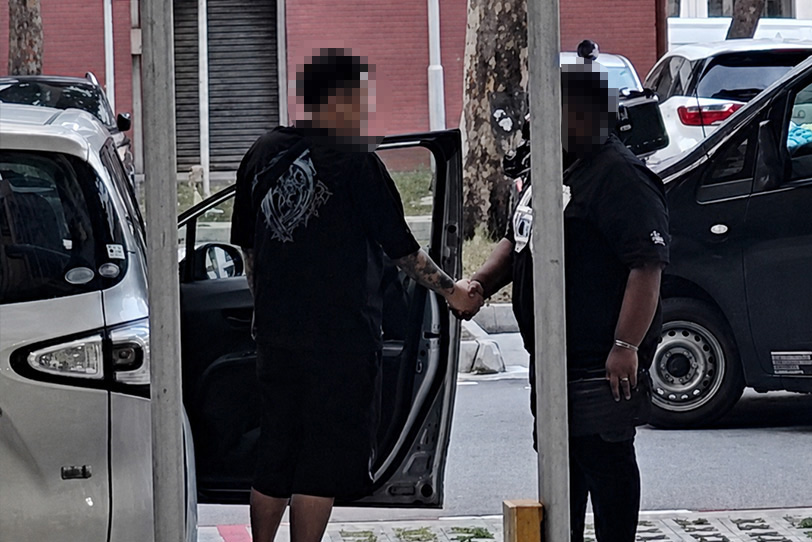
Instead, he drove to an integrated resort and entered the casino shortly after arriving. Our investigators documented his arrival, the location where he parked and the time he entered the casino.

As photography was not conducted within the restricted gaming area, the investigation team maintained observation from lawful public areas.

The employee left the casino more than four hours later. He returned to his vehicle, used his phone for several minutes and then drove home without attending either of the scheduled client locations.

His movements were recorded using time-stamped photographs, video footage and detailed surveillance notes.

THIRD DEPLOYMENT

The company requested an additional deployment to determine whether the casino visit was an isolated incident.

On the third surveillance day, the employee reported to the office in the morning. He later informed his supervisor that he would be attending an appointment and would not be returning that day.

After leaving the office, he stopped briefly at a coffee shop before travelling to the same integrated resort.

He entered the casino during working hours and remained inside for approximately three hours. He then left the resort and travelled to a residential area, where he remained until the end of the company’s working day.

No visit to the client location listed in his work schedule was observed.

COMPARING HIS MOVEMENTS WITH COMPANY RECORDS

After the surveillance deployments were completed, the company reviewed the employee’s submitted appointment records.

On both days that he was observed entering the casino, the employee had recorded client meetings in his work schedule. One entry stated that a meeting had lasted almost three hours, even though he was documented at the casino during that period.

The investigation did not attempt to determine how much money the employee spent or what activities took place inside the gaming area. Our findings were limited to what could be directly and lawfully observed: his movements, the time he entered, the time he left and the appointments he did not attend.

THE FINDINGS

The company received a professionally organised investigation report containing:

• A chronological account of all three surveillance deployments
• Time-stamped photographs and video recordings
• The employee’s movements during working hours
• His arrival and departure times at the casino
• The duration of each casino visit
• The client locations he was scheduled to attend
• A comparison between the observed movements and the records submitted to the company
• Clear limitations concerning activities that could not be observed inside the casino

THE OUTCOME

The first deployment showed the employee carrying out normal work activities. The later deployments, however, established a repeated pattern of casino visits during hours when he claimed to be attending client appointments.

The company provided the investigation report to its management, human resources department and legal adviser before speaking to the employee.

When presented with the documented dates and times, the employee initially disputed the duration of his absences. After reviewing the evidence, he acknowledged that he had visited the casino during working hours and had entered appointments that did not take place.

The company was then able to handle the matter through its internal disciplinary process based on documented facts rather than workplace rumours or assumptions.

All names, businesses, locations and identifying details have been removed or modified to protect confidentiality.

*Exchanging client details with a competitor for extra income is unethical and potentially illegal
It violates client confidentiality, data protection laws, and professional trust. In Singapore, for example, the Personal Data Protection Act (PDPA) strictly prohibits sharing personal data without consent — doing so could expose you to fines, lawsuits, and reputational damage.

Located An Individual Within 72 Hours

CASE OVERVIEW

A client needed to locate a former business associate regarding an unresolved civil matter. Several attempts had already been made to contact the individual, but the phone number was no longer in use, correspondence sent to the last known address had been returned, and the person’s former workplace had ceased operating.

The client provided a full name, an old photograph, a previous residential address and details of the former business. Most of the information was several years out of date.

As the client was working within a limited timeframe, our investigators began tracing efforts immediately.

FIRST 24 HOURS

Our initial checks established that the individual was no longer living at the address supplied by the client.

Ground enquiries confirmed that the unit had changed occupants. The current residents did not know the individual or where the former occupant had moved.

The old business address also produced no immediate result. The company was no longer operating from the premises, and neighbouring occupants could provide only limited information.

Several people with similar names appeared during the initial research. Two appeared to have possible connections to the subject, but further checks confirmed that they were different individuals. These false leads were eliminated before any field deployment was made.

24 TO 48 HOURS

The investigation team reviewed the subject’s historical business connections, previous areas of activity and other lawfully available information.

A possible connection to another business location was identified. However, initial enquiries at the location did not confirm that the subject was currently working or residing there.

Investigators continued checking the surrounding area and established that a person matching the subject’s general description had occasionally been seen there, usually during a limited period of the day.

The information was useful, but it was not strong enough for us to confirm the person’s identity or report that the subject had been located.

48 TO 72 HOURS

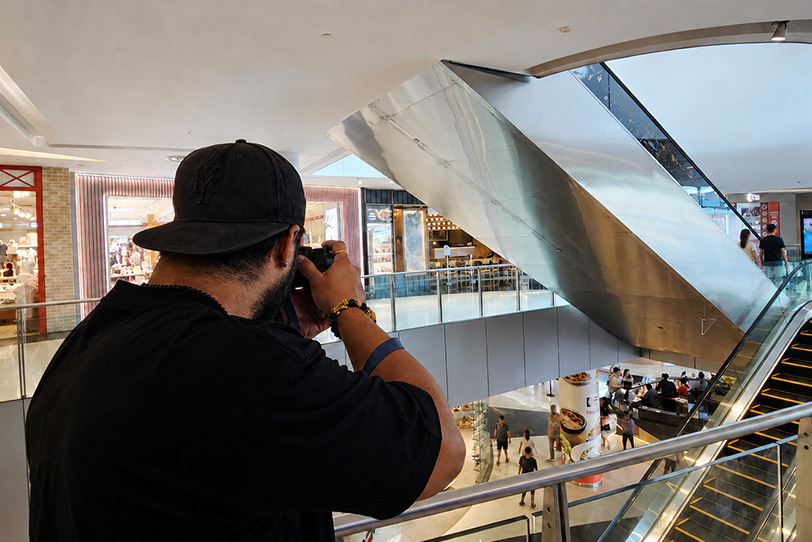
A field team was deployed to observe the location from a public area.

After several hours without activity, an individual matching the photograph supplied by the client arrived. As the photograph was outdated, our investigators did not rely on appearance alone.

Further observations were made to compare the individual’s approximate age, physical features, vehicle and known associations with the information gathered during the investigation.

Once multiple details were consistent, the subject’s identity and current connection to the location were confirmed.

The client was informed that the individual had been successfully located approximately 68 hours after the investigation commenced.

THE FINDINGS

The client received a professionally documented investigation report containing:

• A chronological record of the tracing process
• Checks conducted on the outdated information supplied
• False leads that were examined and eliminated
• Photographs obtained through lawful observation in public areas
• The location at which the subject was confirmed
• The facts used to verify the subject’s identity

THE OUTCOME

The investigation did not produce an immediate answer. The old address was no longer valid, the former workplace had closed and several people shared similar identifying details.

By combining research, ground enquiries and targeted field observation, our investigators were able to locate and verify the correct individual within the required 72-hour period.

The verified findings allowed the client and their legal representative to determine the appropriate next steps. Our investigators did not approach the subject or disclose the existence of the investigation.

All names, locations and identifying details have been removed or modified to protect confidentiality.

Infidelity Surveillance: Two Quiet Nights Before The Pattern Changed

CASE OVERVIEW

The client had been married for more than ten years. Over several months, her husband began returning home later than usual, taking calls outside the room and becoming increasingly protective of his mobile phone.

There was no single piece of evidence proving that he was involved with another person. His explanation was always work-related, and his movements did not follow a fixed schedule. The client did not want assumptions—she wanted to know what was actually happening.

Based on the limited information available, our investigators identified several evenings when the subject was more likely to remain outside after work. Three surveillance deployments were arranged over two weeks.

FIRST DEPLOYMENT

Surveillance commenced near the subject’s workplace before the end of the working day.

The subject left the building, drove to a nearby shopping centre and purchased groceries before returning directly home. No meeting or suspicious activity was observed.

The deployment ended without any significant findings. Everything observed, including the uneventful movements, was recorded in the investigation log and reported to the client.

SECOND DEPLOYMENT

During the second deployment, the subject left work later than expected. Investigators remained in position for several hours before he eventually departed.

He travelled to a coffee shop, ate alone and spent some time using his phone. He then drove home without meeting anyone.

Once again, there was no evidence of infidelity. Rather than forcing a conclusion, we advised the client that further observation would be required.

THIRD DEPLOYMENT

On the third evening, the subject left work and drove in the opposite direction from his usual route home. Due to peak-hour traffic, the surveillance team maintained a careful distance while preserving visual contact.

The subject stopped near a commercial building, where an adult woman entered his vehicle. They travelled together to a restaurant and remained there for approximately one hour.

After leaving the restaurant, the pair displayed physical closeness while walking back to the vehicle. They then travelled to a hotel and entered through the main lobby together.

Our investigators obtained photographs and video recordings of the pair arriving together, interacting outside the hotel and entering the premises. We did not make assumptions about what occurred inside because it could not be directly observed.

More than two hours later, the subject and the woman left the hotel together. They returned to the same vehicle and drove away. The subject later dropped the woman off near a residential property before returning home alone.

THE FINDINGS

The client received a chronological investigation report containing:

• The subject’s movements across all three deployments
• Time-stamped photographs and video recordings
• Locations and arrival and departure times
• Written observations from the surveillance team
• A clear distinction between confirmed observations and matters that could not be verified

THE OUTCOME

The first two deployments did not produce evidence of misconduct, but they helped establish the subject’s normal routine. When that routine changed during the third deployment, the investigation team was able to identify and document the relevant movements.

The findings gave the client factual information instead of suspicion alone. She subsequently used the report when consulting her family lawyer about her available options.

All names, locations and identifying details have been removed or modified to protect confidentiality.